Powercode has been used by regional ISPs for over twenty years. Now there's a focused product line: Command runs the business, Link runs the IPs and monitoring, Atlas handles outside plant. On July 1, the new site and Powercode Link both go live with full IPv6 and Prefix Delegation.
Same company, same team, same code base. On July 1, 2026, the naming catches up to what we actually ship — and two of the biggest changes in the product's history land at the same time.
For twenty years, "Powercode" was one platform. That platform is now called Powercode Command. Same code, same team, same login, same billing. The name caught up because there are now siblings: Powercode Link (DHCP and monitoring) and Powercode Atlas (outside plant). Nothing changes for existing customers except the name on the door.
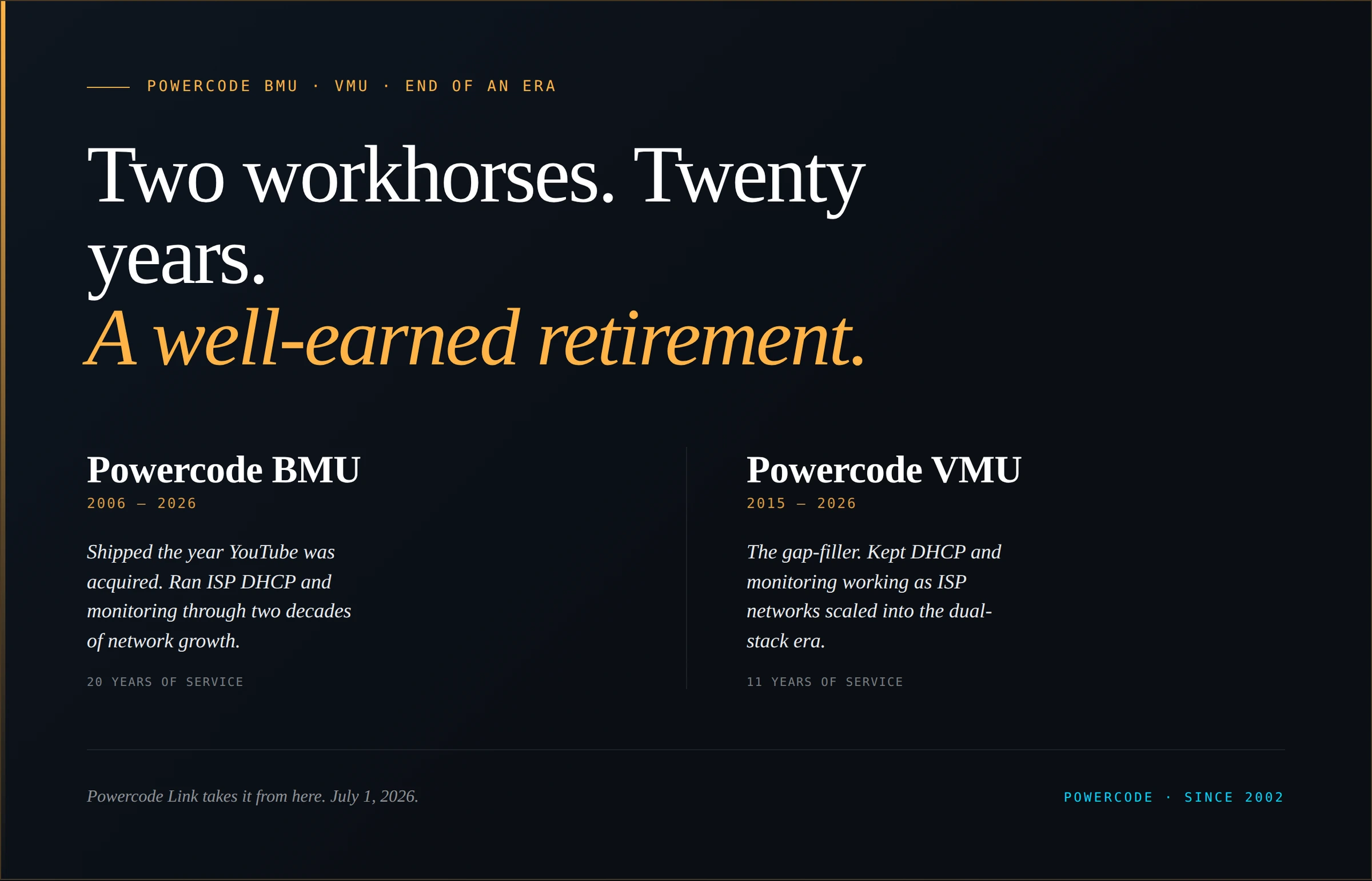
The BMU shipped in 2006. The VMU joined in 2015. Together they served regional ISPs through the growth of the WISP industry and the expansion of fiber. With Powercode Link launching July 1, 2026, both are retiring. Powercode Link takes it from here.
Provisioning a dual-stack subscriber takes the same steps as provisioning a v4-only one. Service plans carry v4 pools, v6 pools, and delegated-prefix size as plan attributes. Command pushes pool config to Link. Link reports the active leases and delegated prefixes back. This is the IPv6 story regional ISPs have been waiting for.
Runs the business.
The platform regional ISPs have been using for two decades. Billing, customer accounts, provisioning, tickets, scheduling, inventory, reports, voice. Full IPv4 and IPv6 support including DHCPv6 Prefix Delegation when paired with Link.
Runs the IPs.
The DHCP and monitoring engine that replaces the VMU and BMU. DHCPv4, DHCPv6 with Prefix Delegation, SNMP polling, ICMP probing, and a unified operator console. Syncs with Command natively. Generally available July 1, 2026.
Runs the plant.
Design, construction tracking, and project management for fiber and other outside plant work. Built for operators who'd rather not buy a separate GIS license. Integrates with Command from day one. Launch date to be announced.
On July 1, both Command and Link support full DHCPv6 with Prefix Delegation. Command provisions IPv6 the same way it provisions IPv4. Link hands out v4 leases, v6 leases, and delegated prefixes to subscriber routers, then writes the resulting state back to Command. Dual-stack subscribers, native IPv6 customers, mixed deployments — all handled in the same console without an extra tool.
Pool definitions, plan templates, customer records, and reports all carry IPv6 alongside IPv4. Provisioning a dual-stack customer takes the same steps as a v4-only one.
RFC 3633 prefix delegation, /56 and /60 pools, IA_NA and IA_PD in the same lease database, configurable preferred and valid lifetimes. Works with the major subscriber router vendors out of the box.
Command pushes pools and reservations to Link. Link reports back active leases, delegated prefixes, and CPE state. No second console, no manual reconciliation between the billing platform and the DHCP server.
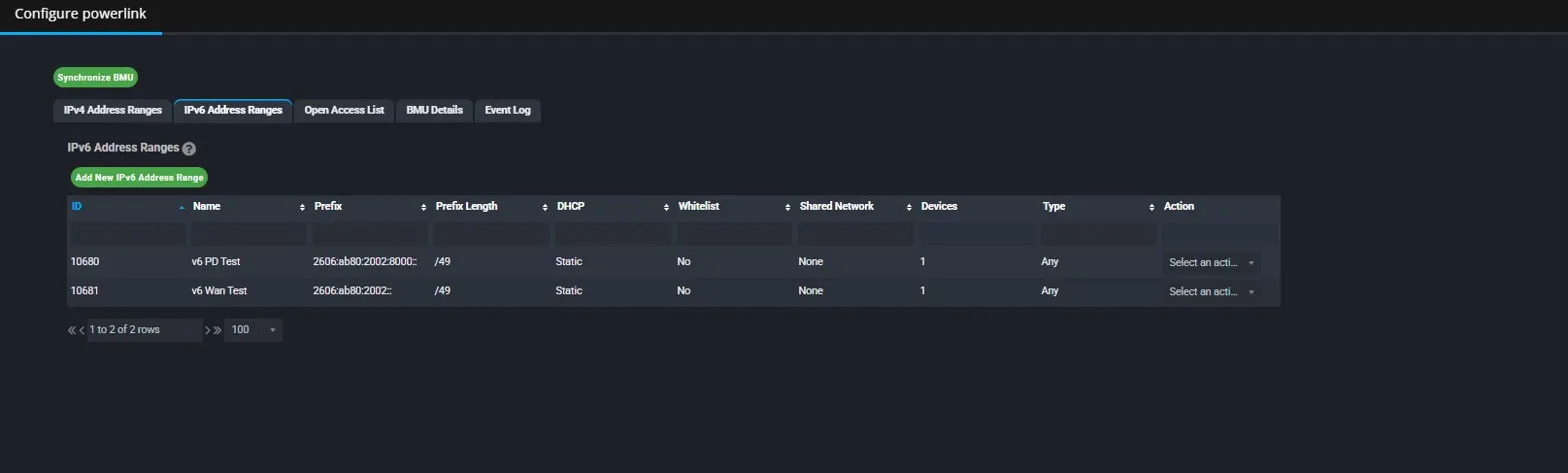
Production UI. The IPv6 Address Ranges tab inside Powercode. The green Synchronize BMU button pushes range configuration to Link. No second tool, no separate login.
Regional ISPs end up looking at the same shortlist eventually. Here's how we describe the field without the marketing varnish.
Tools built for tier-one carriers with tier-one budgets. Long implementations, big license fees, lots of consultants. Fine if you're a national carrier.
Served the early wireless industry well. Many were designed before fiber, IPv6, and modern integration patterns became table stakes, and operators eventually hit those limits.
Newer entrants with cleaner interfaces. Your subscriber and billing data lives in their cloud. Whether that's fine depends on how you think about it.
On hardware you own, priced per subscriber, with the same team that's been shipping it since 2002. Best fit for WISPs, FISPs, regional fiber operators, and small cable.
Your billing data, customer data, and network data stay on machines you control. If we ever go away, you still have your business. That's not a hypothetical pitch, that's how the architecture works.
The Powercode team runs an ISP. When something's wrong with the platform, our own NOC is the first to notice, which keeps us honest about priorities. We use what we ship.
The reason this stuff works is that we'd otherwise be the ones cursing at it from the operations chair.
Tim Wright · Powercode
Thirty minutes, we'll walk through whichever pieces matter to your operation. Command, Link with IPv6 PD, whatever you're actually trying to solve.